

To speak of Audrey Hepburn is not merely to speak of a celebrated actress of the twentieth century. It is to speak of a cultural archetype, a woman who quietly reshaped the meaning of femininity, elegance, and power in a world dominated by rigid stereotypes. More remarkably, she achieved something rare: lasting relevance, respect, and admiration across generations, long after her death.
Audrey Hepburn embodied beauty without excess, elegance without arrogance, and empowerment without aggression. At a time when contemporary society debates identity, gender roles, visibility, and power, her figure continues to be referenced, studied, and emulated. Why does her legacy endure? What did she do differently? And what does her style—authentic, effortless, and quietly bold—offer to modern minds?
This article explores who Audrey Hepburn was, how she expressed femininity and elegance over decades, how she embodied empowerment and earned respect, and what message her life and style leave for today’s world.
1. Who Was Audrey Hepburn?
Audrey Kathleen Ruston was born on May 4, 1929, in Brussels, Belgium. Far from a privileged or glamorous upbringing, her childhood was deeply shaped by trauma and survival. During World War II, she lived in Nazi-occupied Netherlands, where she experienced severe food shortages, fear, and loss.
These experiences left a profound mark on her character. Audrey later spoke openly about hunger and suffering, explaining that these early hardships shaped her empathy and humanitarian values. Her sensitivity was not fragility—it was resilience forged through adversity.
Before acting, Audrey trained as a classical ballerina. Ballet was her first passion, and she studied intensively. However, her body type—tall, slender, and unconventional for the standards of the time—prevented her from becoming a professional dancer. Ironically, this limitation opened the door to cinema.
Her breakthrough came with Roman Holiday (1953), a performance that earned her the Academy Award for Best Actress. She went on to star in films that became cultural landmarks:
- Sabrina (1954)
- Funny Face (1957)
- Breakfast at Tiffany’s (1961)
- My Fair Lady (1964)
Yet Audrey Hepburn’s identity cannot be confined to her filmography. In the later years of her life, she dedicated herself almost entirely to humanitarian work as a UNICEF Goodwill Ambassador, traveling to some of the world’s poorest regions to advocate for children’s rights.
As she famously stated:
“As you grow older, you will discover that you have two hands, one for helping yourself, the other for helping others.”
2. Femininity as a Quiet Revolution
2.1 Femininity Without Hypersexualization
In the 1950s and 1960s, Hollywood promoted a narrow image of femininity—curvaceous, overtly sensual, and designed primarily for the male gaze. Icons such as Marilyn Monroe represented this ideal.
Audrey Hepburn disrupted it entirely.
Her femininity was not built on seduction but on presence, intelligence, and emotional subtlety. She did not perform femininity as spectacle; she lived it as expression. This distinction was revolutionary.
Audrey demonstrated that:
- Softness can coexist with strength
- Grace can carry authority
- Restraint can be deeply compelling
Her femininity did not seek validation; it commanded respect through authenticity.
2.2 The Body as Expression, Not Commodity
Trained in ballet, Audrey’s movements carried precision, discipline, and elegance. Her posture, gestures, and stillness spoke as loudly as dialogue. She occupied space without domination, attracting attention without demanding it.
In today’s culture of constant visibility and performance, this approach feels radical. Audrey Hepburn’s femininity reminds us that power does not require excess.
3. Elegance Sustained Across Decades
3.1 Elegance as Consistency
Audrey Hepburn’s elegance was not rooted in luxury or fashion trends. It emerged from consistency between her inner values and outward expression.
Her lifelong collaboration with designer Hubert de Givenchy exemplifies this. Givenchy did not impose an image upon her; he enhanced what was already there. Her clothing complemented her character rather than overshadowing it.
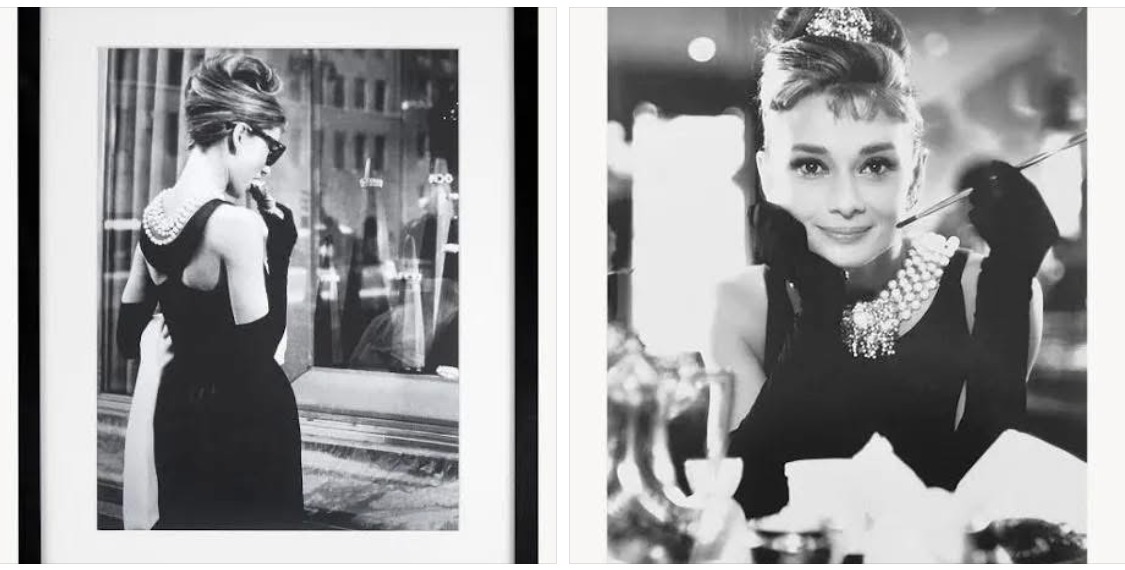
The iconic black dress in Breakfast at Tiffany’s endures not simply because of its design, but because it reflects Audrey herself—clean lines, simplicity, and timelessness.
3.2 Ethical Elegance
Beyond appearance, Audrey’s elegance extended into behavior. She was widely known for her kindness, professionalism, and humility on set. In an industry often marked by ego and excess, she cultivated a reputation rooted in respect.
Elegance, in this sense, became ethical. It was not about being admired, but about how one treats others.
4. Empowerment Without Noise
4.1 The Power of Choice
At the height of her fame, Audrey Hepburn stepped away from acting. This decision, unconventional and often misunderstood, was deeply empowering.
She chose to prioritize:
- Her children
- Her mental and emotional well-being
- Her humanitarian mission
In a culture that equates power with constant visibility, her withdrawal was a declaration of autonomy. Empowerment, in her life, meant choosing alignment over applause.
4.2 Respect Earned Through Integrity
Audrey Hepburn did not rely on confrontation or rhetoric to command authority. Her respect was built on:
- Discipline and professionalism
- Emotional intelligence
- Social responsibility
Her path illustrates that empowerment is not singular. There are multiple ways to inhabit power, including through quiet conviction and sustained integrity.
5. A Lasting Cultural Icon
Why does Audrey Hepburn remain relevant today?
Because she represents something increasingly rare: authenticity sustained over time. She was not a trend, a reinvention, or a carefully curated persona. She evolved without abandoning her core values.
Her image endures not because it was marketed endlessly, but because it was rooted in truth.
6. The Message of Her Style for Modern Minds
If Audrey Hepburn lived today, she likely would not seek digital influence. Yet her impact would be undeniable.
Her legacy offers several lessons to contemporary society:
6.1 Less Noise, More Substance
Presence does not require constant performance.
6.2 Beauty Is an Attitude, Not a Measurement
Audrey redefined beauty by refusing to chase it.
6.3 Empowerment Includes Care
For oneself, for others, and for the world.
6.4 True Style Begins Within
Clothing amplifies character—it does not create it.
Conclusion
Audrey Hepburn was not flawless, but she was profoundly human. Her femininity was liberated, her elegance ethical, and her empowerment intentional. She did not seek to become a symbol, yet she became one because she lived with coherence.
In an era saturated with constructed identities and fleeting relevance, Audrey Hepburn continues to resonate because she never performed a version of herself outside the screen.
Perhaps that is her most powerful legacy:
Authenticity is the most radical form of elegance.